

Theories and model provide different ways of understanding psychological phenomena. While theories help us understand and explain phenomena, models provide an overview of the structure of phenomena. Both are useful for guiding research and generating hypotheses to test.
Over the past 20+ years I have proposed and tested several theories and models to inform research. A brief summary of each model along with the supporting scientific article(s) are presented by clicking the links below.
The Procrastination-Health model
The procrastination-health model (Sirois et al., 2003; Sirois, 2007) is the first model to explicate the links between chronic procrastination and physical health. The model proposes that procrastination confers risk for poor health through both a stress-related route and a behavioral route. However, cross-sectional and longitudinal research suggest that stress is the key pathway linking procrastination to poor health.
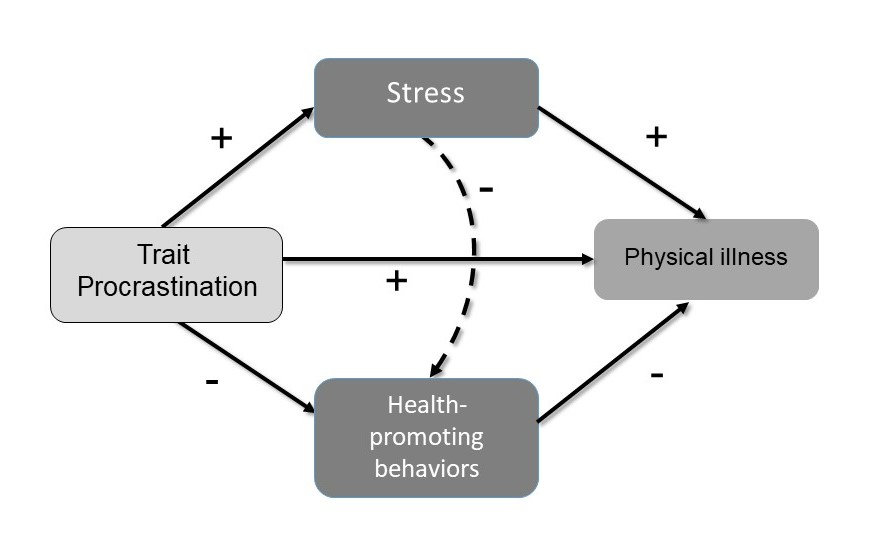
Sirois, F. M., & Biskas, M. (2024). Procrastination and health in nurses: Investigating the roles of stress, health behaviours and social support. International Journal of Environmental Research and Public Health, 21, 898. (IF = 4.6). Open access
Sirois, F. M., Stride, C., & Pychyl, T. A. (2023). Procrastination and health: A longitudinal test of the procrastination-health model. British Journal of Health Psychology, 28, 860-875. (IF = 3.5) Open access
Sirois, F. M. (2015). Is procrastination a vulnerability factor for hypertension and cardiovascular disease? Testing an extension of the procrastination-health model. Journal of Behavioral Medicine, 38, 578-589 (IF = 3.47). Link | Self-archived version
Sirois, F. M., van Eerde, W., & Argiropoulou, M. I. (2015). Is procrastination related to sleep quality? Testing an application of the procrastination-health model. Cogent Psychology, 2 (1). Open access
Sirois, F. M. (2007). “I’ll look after my health, later”: A replication and extension of the procrastination-health model with community-dwelling adults. Personality and Individual Differences, 43, 15-26. (IF = 3.95) Link | Self-archived version
Sirois, F. M., Melia-Gordon, M.L., & Pychyl, T. A., (2003). “I’ll look after my health, later”: An investigation of procrastination and health. Personality and Individual Differences, 35(5), 1167-1184. (IF = 3.95). Link | Self-archived version
Stress context vulnerability model of procrastination
The Stress Context Vulnerability model of procrastination (Sirois, 2023)
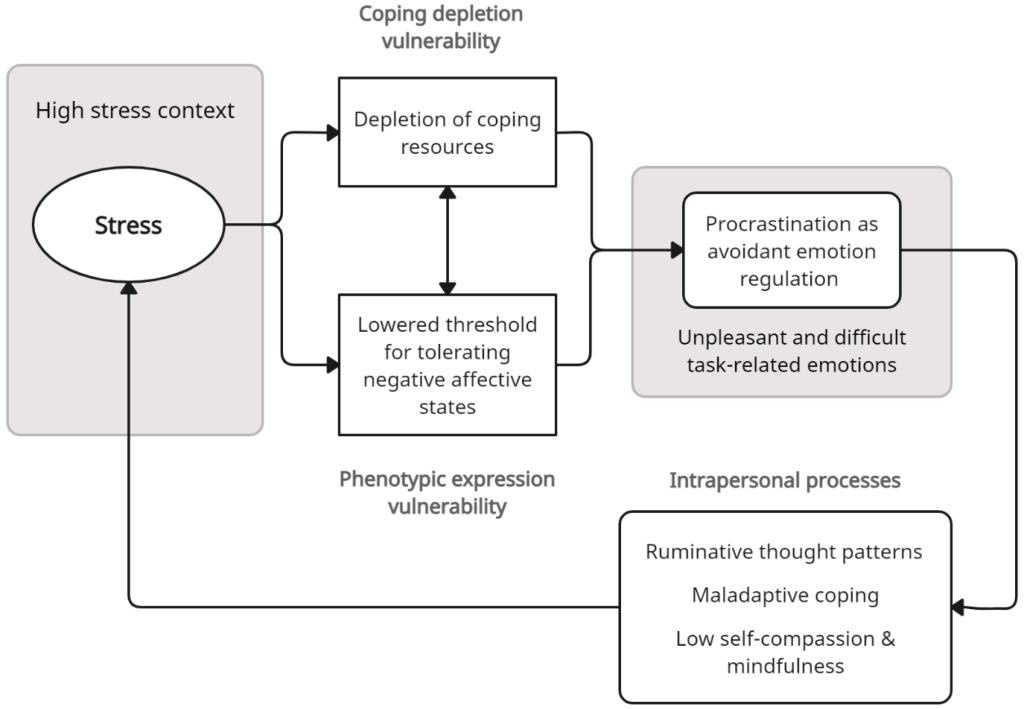
Sirois, F. M. (2023). Procrastination and stress: A conceptual review of why context matters. International Journal of Environmental Research and Public Health,20(6), 5031. (IF = 4.61). Open access
Temporal Mood Regulation Theory of Procrastination
SUMMARY
Sirois, F. M., & Pychyl. T. A. (2013). Procrastination and the priority of short-term mood regulation: Consequences for future self. Social and Personality Psychology Compass, 7 (2), 115–127. (IF- 3.80). Link | Self-archived version
Self-regulation Model of Procrastination & Perfectionism
SUMMARY
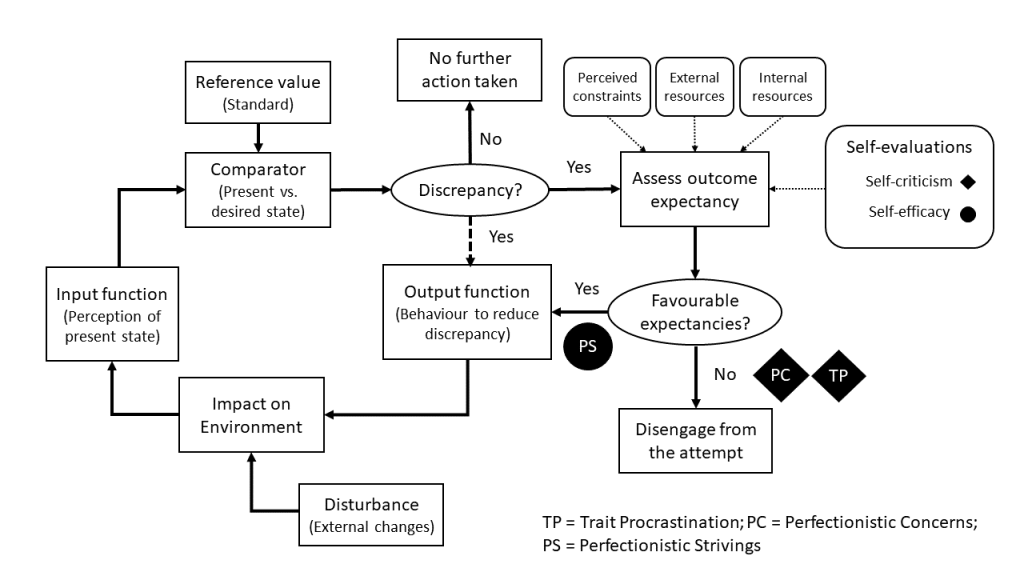
Sirois, F. M., Molnar, D. M., & Hirsch, J. K. (2017). A meta-analytic and conceptual update on the associations between procrastination and multidimensional perfectionism. European Journal of Personality, 31, 137-159. (IF = 7.00). Link | Self-archived version
STress and Coping Cyclical Amplification Model of Perfectionism in Illness (SCCAMPI)
The SCCAMPI model (Molnar, Sirois, & Methot, 2016)
Sirois, F. M., Toussaint, L. L.,Hirsch, J. K., Kohls, N., & Offenbächer, M. (2021). A person-centred test of multidimensional perfectionism and health in people with chronic fatigue syndrome versus healthy controls. Personality and Individual Differences, 181, 111036. (IF = 3.95). Link | Self-archived version
Sirois, F. M., Toussaint, L. L.,Hirsch, J. K., Kohls, N., Weber, A., & Offenbächer, M. (2019). Trying to be perfect in an imperfect world: A person-centred test of perfectionism and health in fibromyalgia patients versus healthy controls. Personality and Individual Differences, 137, 27-32. (IF = 3.95). Link | Self-archived version
Molnar, D. M., Sirois, F. M., & Methot, T. (2016). Trying to be perfect in an imperfect world: Examining perfectionism in the context of chronic illness. In F. M. Sirois and D. S. Molnar (Eds.), Perfectionism, Health, and Well-being. Springer. Link
Self-regulatory Framework for Understanding the Effects of Time Perspective
SUMMARY
*Baird, H. Webb, T. L., Sirois, F. M., & Gibson-Miller, J. (2021). Understanding the effects of time perspective: A meta-analysis testing a self-regulatory framework. Psychological Bulletin, 147, 233–267. (IF = 20.85). Link | Self-archived version
Temporal-Affective Self-regulation Resource Model
SUMMARY
Sirois, F. M. (2016). Perfectionism and health behaviors: A self-regulation resource perspective. In F. M. Sirois and D. S. Molnar (Eds.), Perfectionism, Health, and Well-being. Springer. Link
Sirois, F. M., & Hirsch, J. K. (2015). Big Five traits, affect balance and health behaviors: A self-regulation resource perspective. Personality and Individual Differences, 87, 59–64. (IF = 3.95). Link | Self-archived version
Sirois, F. M. (2015). A self-regulation resource model of self-compassion and health behaviour intentions in emerging adults. Preventive Medicine Reports, 2, 218–222. (IF- 2.81). Open access
Triadic Pathways Model of Self-Compassion and Health
SUMMARY
Sirois, F. M. (2023). A Triadic Pathway Model of Self-Compassion and Health. In: Finlay-Jones, A., Bluth, K., Neff, K. (eds) Handbook of Self-Compassion. Mindfulness in Behavioral Health. Springer, Cham. Link
Emotional Adaptation to Relationship Dissolution Model
SUMMARY
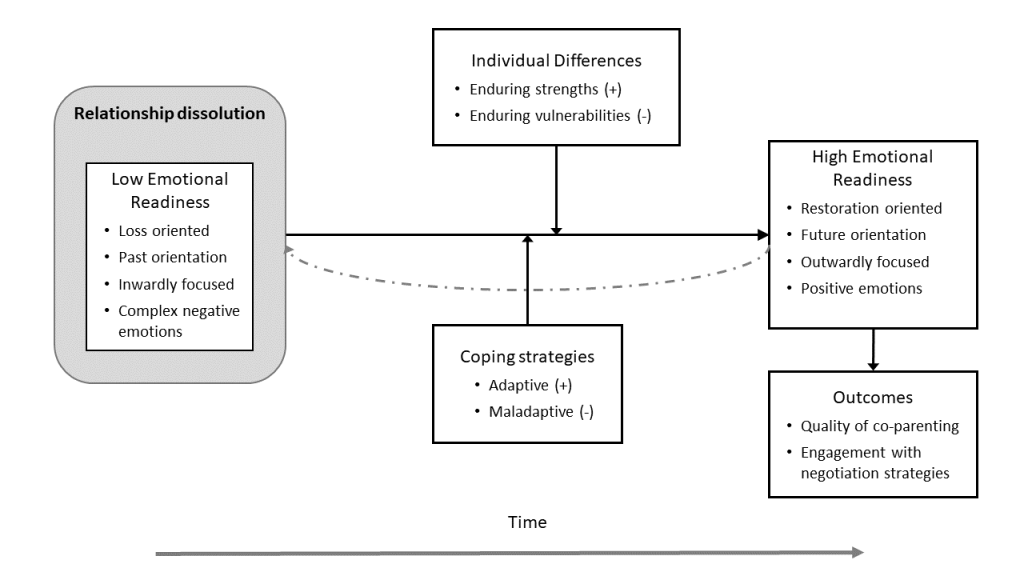
Millings, A., Hirst, S., Sirois, F. M., & Houlston, C. (2020). Emotional Adaptation to Relationship Dissolution: A new conceptual model and measure. PLoS ONE. (IF = 2.74) Open access
Consumer model of CAM/CHA commitment
SUMMARY
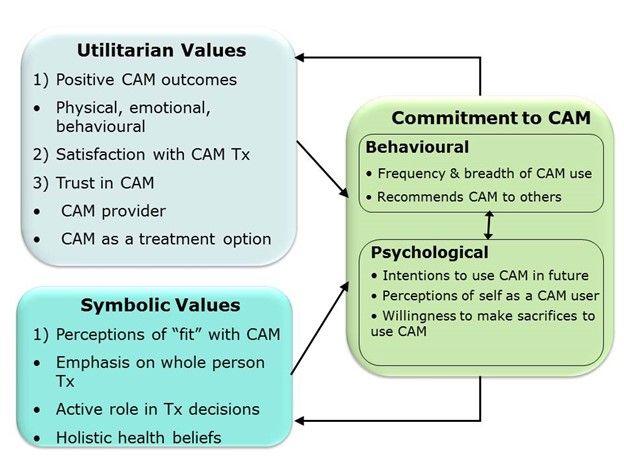
Sirois, F. M., Riess, L., & Upchurch, D. (2017). Implicit reasons for disclosure of use of complementary health approaches (CHA): A consumer commitment perspective. Annals of Behavioural Medicine, 51, 764–774. (IF = 4.87). Link | Self-archived version
Sirois, F. M., Kristofferson, A., & Salamonsen, A. (2016). Reasons for continuing use of complementary and alternative medicine (CAM): A consumer commitment model. BMC Complementary and Alternative Medicine. (IF = 2.84). Open access
Sirois, F. M. (2014). Looking beyond the barriers: Practical and symbolic factors associated with disclosure of complementary and alternative medicine (CAM) use. European Journal of Integrative Medicine, 6, 545-551. (IF = 1.81). Link | Self-archived version
Dual Continuum Model of Complementary health Approaches (CHA) use
SUMMARY

Upchurch, D. M., Liang, L., & Sirois, F. M. (2018). A dual continuum model of the reasons for use of complementary health approaches among overweight and obese adults: Findings from the 2012 NHIS. BMC Complementary & Alternative Medicine (IF = 2.84). Open access
 Fuschia Sirois